⚠️
RPGLMS
Leveled-Up Learning
Teachers build a course as a campaign, and students play through its lessons as heroes. Every teaching feature is free for teachers and students; paid plans add AI credit and collaborators.
Try the demo
No account needed
Pedagogy
Each course is planned backward from what students should be able to do, and the story is written to serve those objectives.
- Three levels. A Campaign (unit) has one Framing Concept, each Path (chapter) has a Guiding Question, and each Node (lesson) has one Learning Objective.
- Objective first. When the AI Wizard drafts a lesson, its instructions put the learning objective ahead of the story.
- Rising demand. In a chapter of three or more lessons, the Wizard aims the first lessons’ questions at remembering and understanding, the middle ones at applying and analyzing, and the last at evaluating and creating. It tags every question it writes with a Bloom’s level.
Why
Backward design plans a unit from the understanding it is meant to produce and the evidence that will show it, before choosing activities (Wiggins & McTighe, 2005).
The revised Bloom’s taxonomy names six levels of cognitive process, from remember to create, that objectives and questions can be written against (Krathwohl, 2002).
Where it can go wrong
A Bloom’s level is a label the Wizard assigns, not a measurement. A verb like “identify” can be easy or hard depending on the text.
References
- Krathwohl, D. R. (2002). A revision of Bloom’s taxonomy: An overview. Theory Into Practice, 41(4), 212–218. https://doi.org/10.1207/s15430421tip4104_2
- Wiggins, G., & McTighe, J. (2005). Understanding by Design (2nd ed.). Association for Supervision and Curriculum Development.
A lesson is a short run of Checks (steps), and each one moves the student from taking something in, to using it, to saying what they think. A teacher builds each Check as one of three kinds, named below; a student sees the steps under check names such as History Check and Persuasion Check, which the Gameplay card lists.
- Investigation. The student takes in a passage, a clip, a chart or a set of reveals, then fills in a clue whose answers are in what they just read. Every blank has to be right. Hints and wrong tries do not affect Shards.
- Report. The student weighs a question and takes a side. The pick is not graded, and once at least three students have decided, the Party sees how it split.
- Reflection. The student answers in their own words. There is no wrong answer, and the Check is not complete until they answer.
- Limits. A lesson holds up to twelve Checks. Its quiz, the Engagement, stays closed until every required Check is done.
Why
The ICAP framework sorts learning activities into passive, active, constructive and interactive modes, and predicts that learning increases as students move from passive to active to constructive to interactive engagement. The authors support the prediction with laboratory and classroom studies of note taking, concept mapping and self-explaining (Chi & Wylie, 2014).
References
- Chi, M. T. H., & Wylie, R. (2014). The ICAP framework: Linking cognitive engagement to active learning outcomes. Educational Psychologist, 49(4), 219–243. https://doi.org/10.1080/00461520.2014.965823
Students meet each question more than once, mixed in with others, and move on by passing.
- Three quizzes. Each lesson ends in a mini quiz, the Engagement, passed at 70%. Each Path (chapter) ends in a Trial (chapter quiz) and each Campaign (unit) in a Rift (final exam), both drawing on every question in the published lessons they cover. The Rift opens once the unit’s Trials are passed.
- One question bank. A teacher writes each question once. The Engagement, Trial and Rift reuse it, and the order of questions and answers is shuffled at the start of each game.
- Retakes. Retakes are open unless the teacher sets a limit of 1, 2 or 3 attempts on a Campaign’s Trials and Rift. Passing again earns one more Shard.
- Prerequisites. A teacher can make one lesson a prerequisite for a later lesson in the same chapter, and the server will not open the later lesson for a student until the prerequisite’s quiz is passed.
- Gradebook. The gradebook shows each student’s progress through the lessons, the score on each Trial and on the Rift, and whether each is passed, per Party. A course’s creator or an editor can reset a lesson or chapter for every student, which removes their completed Checks and written answers and cannot be undone.
Why
Students who took recall tests on prose passages retained substantially more after two days and after a week than students who restudied the same passages, even though restudying made students more confident (Roediger & Karpicke, 2006).
A review of ten study techniques rated practice testing and distributed practice as the two with high utility (Dunlosky et al., 2013).
A meta-analysis of 108 controlled evaluations found that mastery learning programs raised students’ examination performance in colleges, high schools and the upper elementary grades, with stronger effects for the weaker students in a class (Kulik et al., 1990).
A review of classroom assessment research concluded that formative assessment, where evidence of what students have learned is used to adapt the teaching, produces substantial gains in achievement (Black & Wiliam, 1998).
Where it can go wrong
Mastery learning programs can increase the time students spend on instruction (Kulik et al., 1990).
References
- Black, P., & Wiliam, D. (1998). Assessment and classroom learning. Assessment in Education: Principles, Policy & Practice, 5(1), 7–74. https://doi.org/10.1080/0969595980050102
- Dunlosky, J., Rawson, K. A., Marsh, E. J., Nathan, M. J., & Willingham, D. T. (2013). Improving students’ learning with effective learning techniques. Psychological Science in the Public Interest, 14(1), 4–58. https://doi.org/10.1177/1529100612453266
- Kulik, C.-L. C., Kulik, J. A., & Bangert-Drowns, R. L. (1990). Effectiveness of mastery learning programs: A meta-analysis. Review of Educational Research, 60(2), 265–299. https://doi.org/10.3102/00346543060002265
- Roediger, H. L., & Karpicke, J. D. (2006). Test-enhanced learning: Taking memory tests improves long-term retention. Psychological Science, 17(3), 249–255. https://doi.org/10.1111/j.1467-9280.2006.01693.x
Students choose the difficulty of a battle, how their character looks and which class their Shards level. Hearts, rewards and the Party leaderboard are on the Gameplay card.
- Difficulty. For a Trial or Rift, the student picks Easy, Normal or Hard, and a teacher can set the lowest one allowed.
- Character. Students design how their character looks and choose which unlocked character class their Shards level.
Why
Self-determination theory holds that intrinsic motivation depends on three needs: autonomy, competence and relatedness (Ryan & Deci, 2000).
A meta-analysis of gamification in education found small positive effects on cognitive, motivational and behavioral learning outcomes (g = .49, .36 and .25), with game fiction and social interaction as significant moderators (Sailer & Homner, 2020).
Where it can go wrong
A semester-long study of a course that added leaderboards and badges found lower intrinsic motivation and lower final exam scores than the same course without them (Hanus & Fox, 2015).
References
- Hanus, M. D., & Fox, J. (2015). Assessing the effects of gamification in the classroom: A longitudinal study on intrinsic motivation, social comparison, satisfaction, effort, and academic performance. Computers & Education, 80, 152–161. https://doi.org/10.1016/j.compedu.2014.08.019
- Ryan, R. M., & Deci, E. L. (2000). Self-determination theory and the facilitation of intrinsic motivation, social development, and well-being. American Psychologist, 55(1), 68–78. https://doi.org/10.1037/0003-066X.55.1.68
- Sailer, M., & Homner, L. (2020). The gamification of learning: A meta-analysis. Educational Psychology Review, 32(1), 77–112. https://doi.org/10.1007/s10648-019-09498-w
The AI Wizard
The teacher describes the unit in their own words, and the AI Wizard drafts it from that description and any documents they add. New lessons stay drafts until the teacher publishes them.
- A whole unit. A unit-wide request drafts Paths (chapters) with their guiding questions, Nodes (lessons) with their Checks and quiz questions, and vocabulary in one pass, then reports on the result.
- Source Library. Teachers on Patron and up add Markdown documents to the course’s Source Library. The Wizard reads them when it plans and cites them by the attribution the teacher gives them.
- Illustrations. Illustrations for a lesson’s Checks are generated with Gemini image models. Asking again makes a new image and does not edit the old one.
- Keep working. A generation keeps running if the teacher leaves. The Wizard’s History tab lists each one, and “Wizard finished” lands in the inbox. A teacher can have three running at once.
On an existing unit, the Wizard can propose a plan of changes before it writes anything. The teacher reviews the plan, and approved changes go to a draft canvas.
- Plan. The Wizard reports what it found and proposes changes, and nothing is rewritten until the teacher approves the plan. Each change can be switched off in the plan, or discarded on its own once it is drafted.
- Save. Changes stay on the draft canvas until the teacher saves. A revision to a lesson that is already published goes live to students when it is saved.
- Undo. Step back undoes up to ten Wizard changes in a session. A restore point is kept before every AI save, the last ten, and restoring one puts the Campaign back as it was.
- Realign. When an approved change rewrites a Path’s guiding question, the plan lists the Nodes that would need to follow it. The teacher ticks the ones to realign, and the Wizard drafts those changes for a second review.
Why
A 2026 systematic review of 105 studies of teachers using generative AI, which Dr. Simmons co-authored, found that adoption depends less on access to the tools than on conditions such as professional development, trust and teacher autonomy (Ayubian et al., 2026).
References
- Ayubian, S., Aguilar Chávez, G., Wiafe, E., Shahsavari, V., Khamisani, N., Sohail Quidwai, N. U. S., Simmons, D., Rios, A., Sadique, F., & Clark, J. S. (2026). Teachers and generative AI: A systematic review of adoption, competence, professional development, and socio-technical experiences. Education Sciences, 16(9), 1501. https://doi.org/10.3390/educsci16091501
After the Wizard drafts a lesson, it writes a coaching summary for the teacher, with Next steps and Quality notes.
- Bloom’s Distribution. The summary shows how a lesson’s questions fall across Bloom’s levels. The server counts them from each question’s tag, so the count is not an estimate by the AI, and untagged questions are left out.
Where it can go wrong
The Wizard is told which Bloom’s levels to aim a lesson’s questions at, and that is an instruction to the model rather than a guarantee. The tags are whatever level the model reports.
Gameplay
A lesson is a run of Checks. A teacher builds each one as an Investigation, a Report or a Reflection, and the tabs here use the check names a student sees on each step. In an Investigation, the student takes in a passage, a picture, a video, a chart or a set of hidden items, then solves a clue from it.
- Take it in. A History Check is a passage that the student marks as read. A Performance Check is an image, video or link, and it passes on engagement, not on a full watch. An Insight Check is a chart. A Sleight of Hand Check hides items that the student taps open in order, and it passes on the last one.
- Solve the clue. An Investigation Check is a sentence with blanks. The blanks are the lesson’s key terms, every blank has to be right, and the answers are in the text the student has just seen.
- Hints. Neither a hint nor a wrong try changes the Shard the check pays, and the teacher can see both.
In a Report, companions who disagree hold different positions on a question, and the student takes one. The step asks a student to weigh a case, and the answer is not graded.
- The positions. Two or three positions are on the table, each held by a different companion. The student picks the idea, not the character, and the first pick stands.
- Four ways to answer. A student can choose one position, rank three, set a four-stop scale between two, or choose one and write why.
- The class’s response. Once the student has taken a side, a chart shows how the Party split and where they fall in it. The chart appears when at least three students have decided. On a written Report, the student also reads classmates’ reasons.
A Reflection asks for the student’s own words or choice, and no answer is wrong. It is where a student says what they think about what they have just learned, and reads what the class thinks.
- Five Checks. A Persuasion Check asks for a written response. A Perception Check is a scale, a Charisma Check is a choice and an Initiative Check is a ranking. A Wisdom Check closes a lesson step with a reflection and no sides.
- The class’s answers. A student reads the class’s answers after posting their own. Written answers are shown most-liked first, and the scale, choice and ranking Checks show as a class tally.
- Likes. A student can like a classmate’s written answer once, never their own, and each like earns the writer Renown.
Each lesson ends in an Engagement, a mini quiz passed at 70%. Each Path (chapter) ends in a Trial against the mob that guards it, and each Campaign (unit) ends in a Rift against its Boss. The student recalls what the lessons taught, one question at a time.
- Dice for damage. A right answer rolls damage: a d8 for a pick-one question, a d6 per correct choice on pick-many, a d4 per item on ordering. A streak of three adds a die, and so does a quick answer when the teacher has set a question timer.
- Hearts. A wrong answer costs a heart and resets the streak. By default, three correct answers in a row win one back. Running out ends the battle, and the student can try again unless the teacher has capped attempts.
- Difficulty. Students choose Easy, Normal or Hard. The mob’s HP is tuned to about 65%, 80% or 95% accuracy, and capped so that a flawless run almost always wins. A teacher can set the lowest difficulty allowed.
- Leaderboard. Each Trial and Rift has a leaderboard. A student sees the top scores in their own Party, and their own place when it is below the top.
A student earns Shards for finishing work, Gemhearts for winning Trials and Renown from classmates’ likes. A wrong answer takes none of them away.
- Shards. 1 Shard for each Check and 4 for passing a lesson’s Engagement. Shards level up the student’s character class.
- Gemhearts. Winning a Trial secures its mob’s Gemheart, and a full set opens the unit’s Rift.
- Renown. Renown comes from classmates’ likes on written answers. It earns titles and is kept separate from level.
World
Eight companions travel with the hero, and each is cast for a job. A teacher can rename any of them and change how they speak.

Longstaff
The long view: where this came from, how it grew, and what steady care costs.



Tomtom
The essentials: recall, the basics, and what must hold before the company moves on.



Synth
What comes next: predictions, what-ifs, and inventing something new from what was learned.



Jazz
The tempting mistake: reveals, and distractors that carry a misconception.



Canon
Evidence and analysis: charts, worked reasoning, and what the evidence supports.



Koda
Competing interests: positions and priorities, and who decides and who pays.



Grover
Application: demonstrations, and how a thing is actually done.



Lyra
How it lands on people: perspectives, and the consequences for others.


Each companion has five moods, and the story picks the one that fits the moment: a solved clue, a wrong blank, an opened hint, a posted answer.
Students are addressed as “you” and never speak as a companion. The Sovereign speaks the course’s Lore in the first person.
Why
A meta-analysis of 43 studies with 3,088 participants found that pedagogical agents, on-screen characters that facilitate instruction, produced a small but significant effect on learning, and were more beneficial for K-12 students than for post-secondary students (Schroeder et al., 2013).
References
- Schroeder, N. L., Adesope, O. O., & Gilbert, R. B. (2013). How effective are pedagogical agents for learning? A meta-analytic review. Journal of Educational Computing Research, 49(1), 1–39. https://doi.org/10.2190/EC.49.1.a
A mob guards each Path (chapter) and a Boss closes each Campaign (unit). They are the opponents in the Trial and the Rift.
DragonFree
4 colourways: Cinder, Frost, Blight, Magma.
FrogPatron+
4 colourways: Forest, Frost, Ember, Sand.
MimicPatron+
4 colourways: Void, Blight, Cinder, Frost.
SorcererFree
4 colourways: Lich, Chronomaster, Necromancer, Sanguinist.
WatcherPatron+
1 colourway: Radiant.
The app has 5 mobs in 17 colourways. Dragon and Sorcerer are free, and the rest come with Patron and up.
A free student whose chapter has a Patron-only mob sees a Dragon in the same colour.
A teacher on Patron or up can tint a mob’s colour for the whole class.
Why
In a study of 153 middle-school students using a narrative-centered science game, Rowe and colleagues found a strong positive relationship between learning outcomes, in-game problem solving and engagement, which held after controlling for background knowledge and game-playing experience (Rowe et al., 2011).
A meta-analysis of gamification in education also found that including game fiction strengthened effects on behavioral outcomes (Sailer & Homner, 2020).
References
- Rowe, J. P., Shores, L. R., Mott, B. W., & Lester, J. C. (2011). Integrating learning, problem solving, and engagement in narrative-centered learning environments. International Journal of Artificial Intelligence in Education, 21(1–2), 115–133. https://doi.org/10.3233/JAI-2011-019
- Sailer, M., & Homner, L. (2020). The gamification of learning: A meta-analysis. Educational Psychology Review, 32(1), 77–112. https://doi.org/10.1007/s10648-019-09498-w
Each Path is set in a land that the teacher picks, and every student in the class sees the same one.
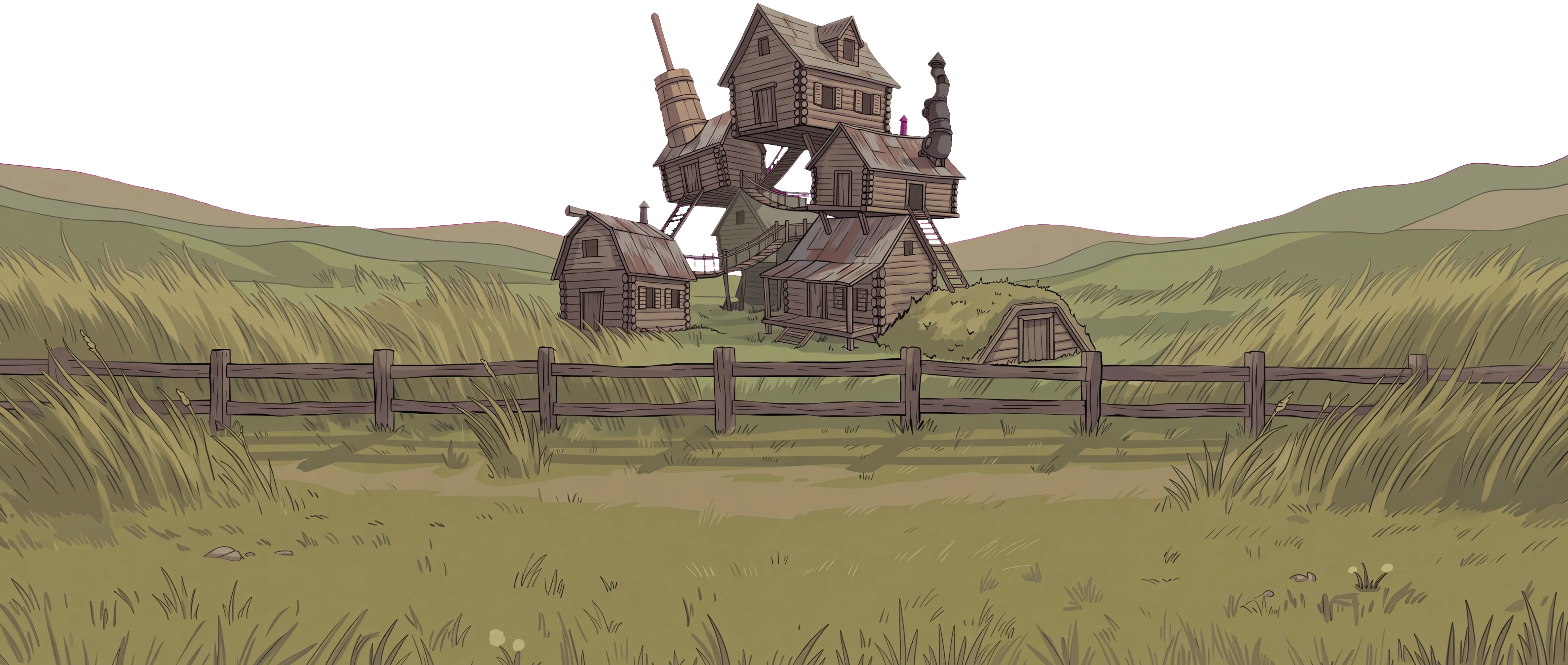
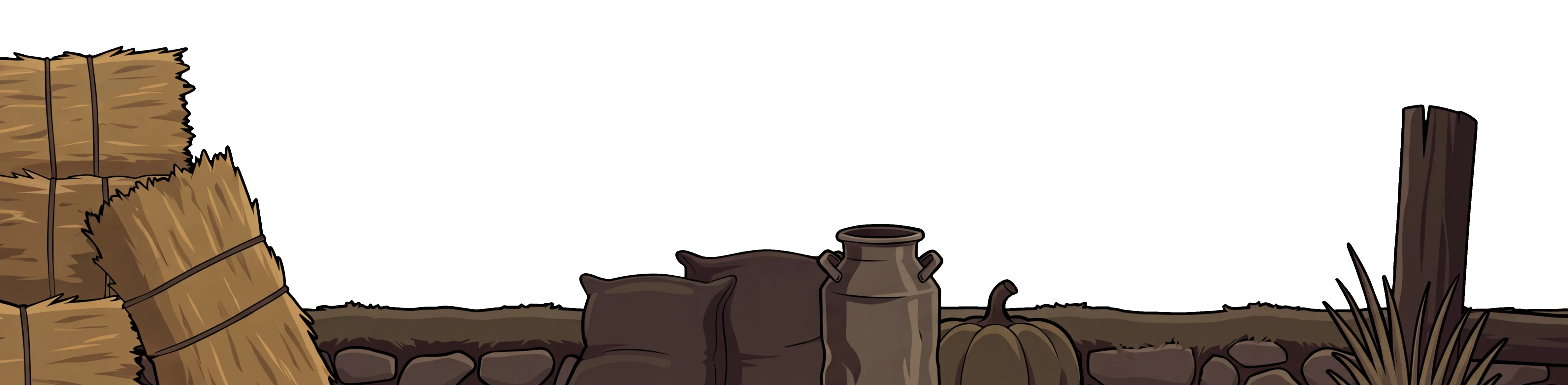
Heartland
Ploughed country, market villages, and the walled roads between them — the settled, fed land a road can cross in a day.
5 landscapes, one free. The picture shown is Prairie Farm.
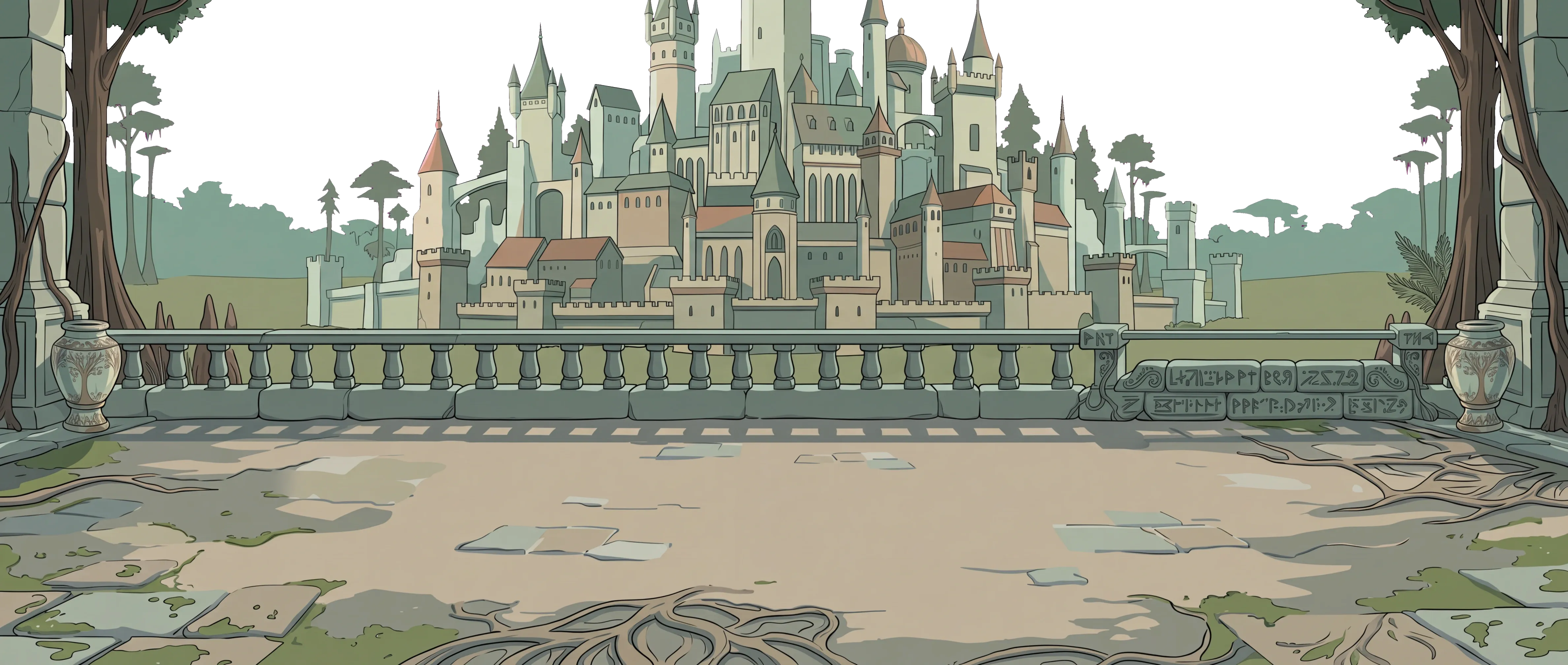
Wilds
Old forest and green jungle, closed over by canopy, where the path is whatever the trees allow.
5 landscapes, one free. The picture shown is Forest Castle.
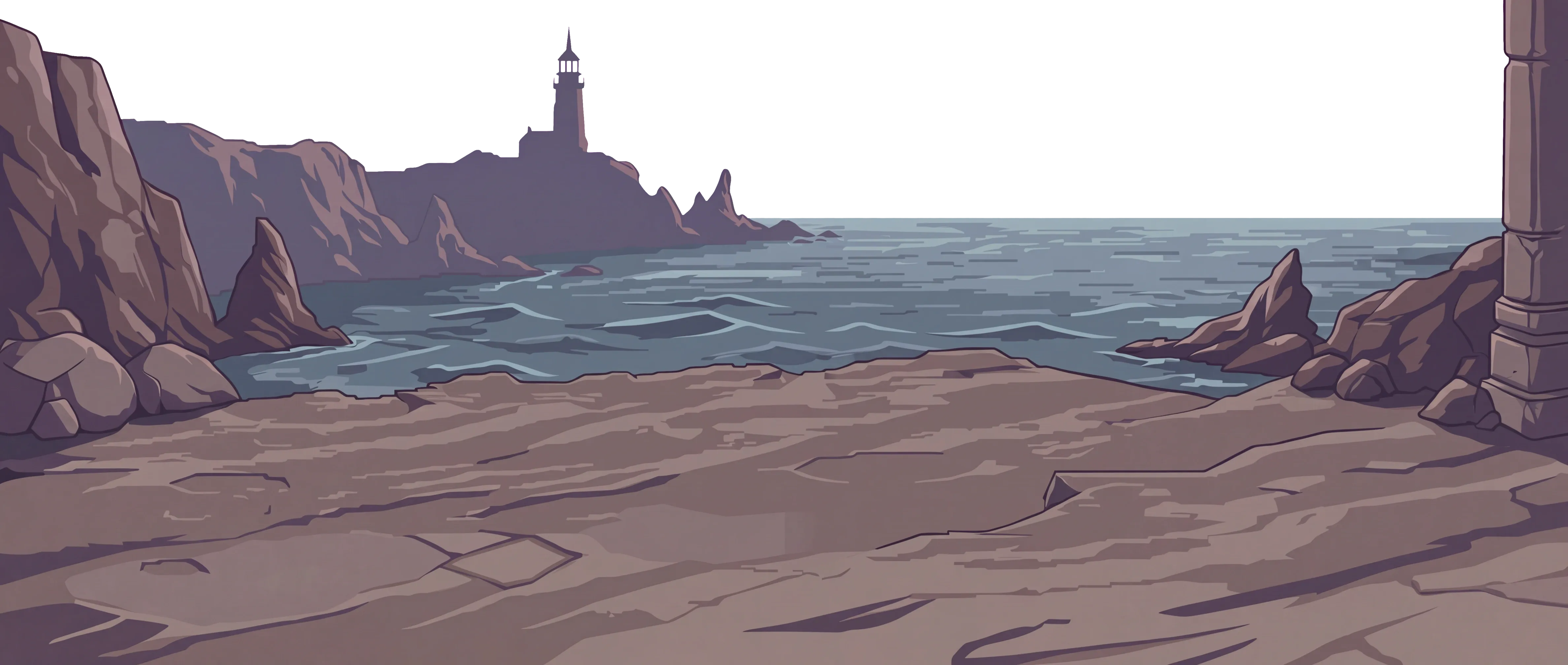
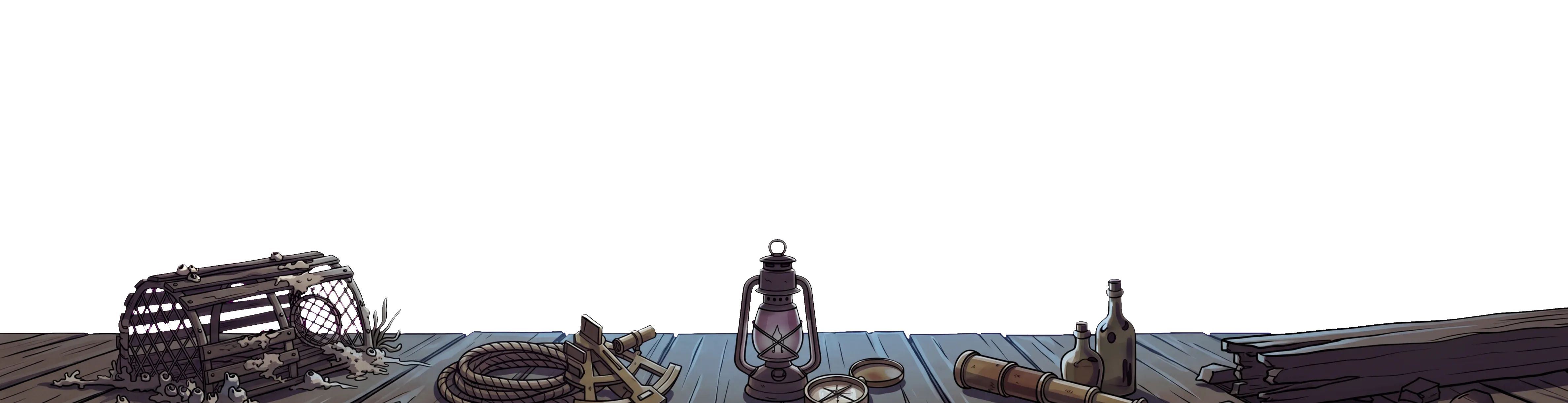
Reach
Where the land runs out: coves, harbours, temple isles, and the shipping lanes between them.
5 landscapes, one free. The picture shown is Lighthouse Cove.
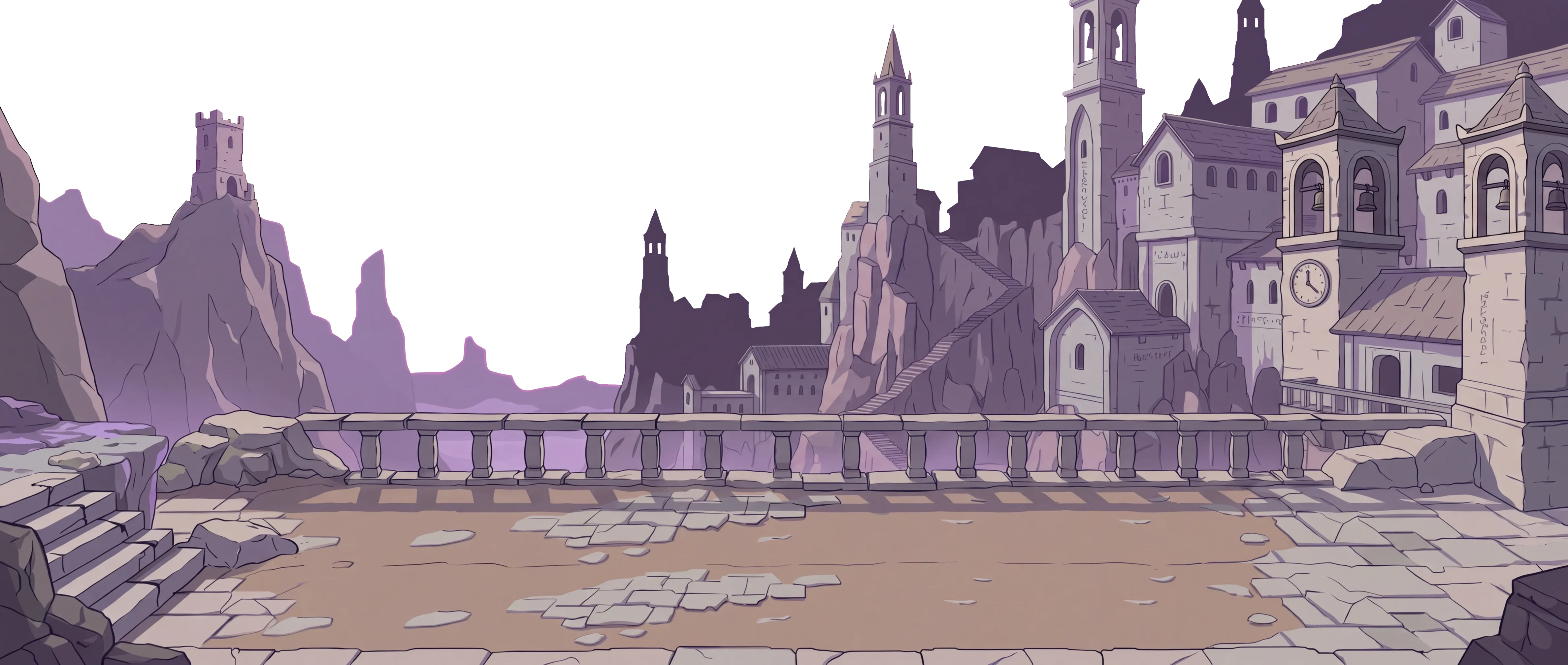
Peaks
Crag and high pass, thin air and grey stone, where anything built has to cling.
5 landscapes, one free. The picture shown is Cliff Monastery.
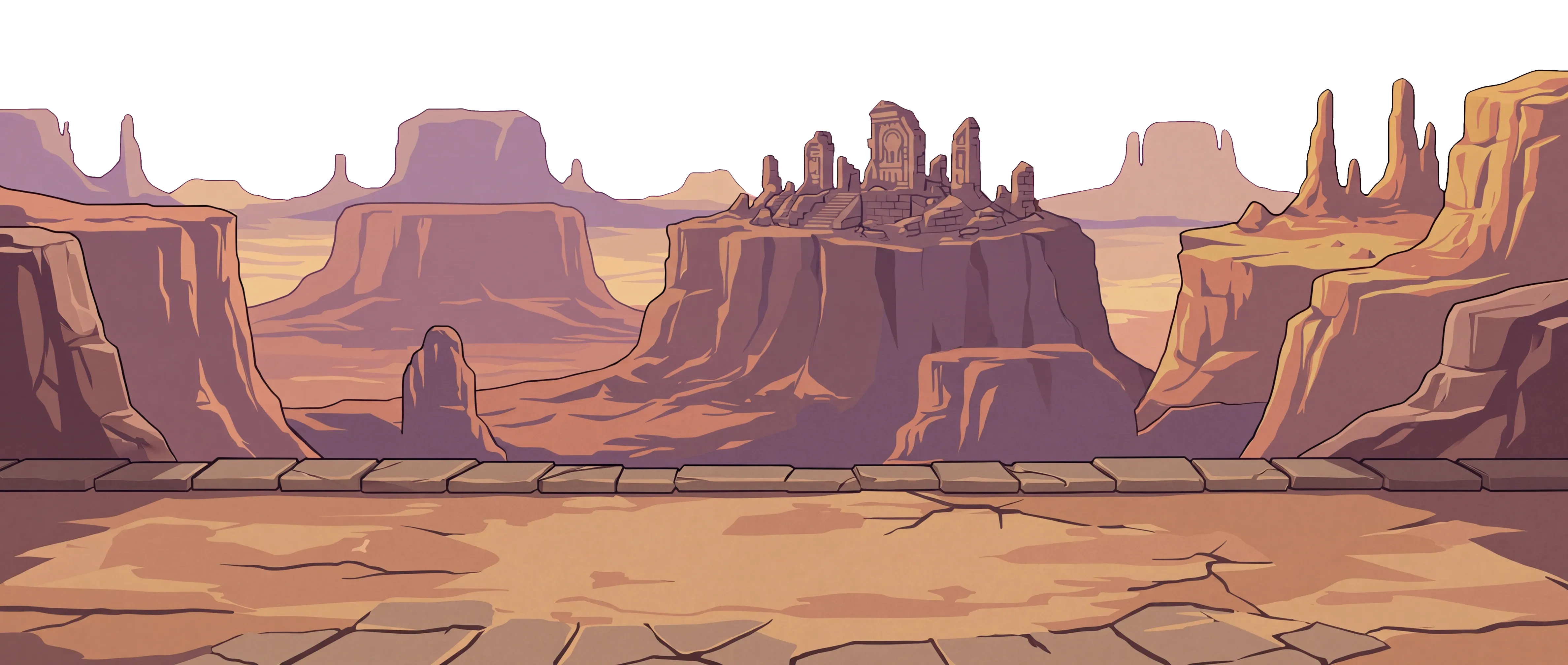
Wasteland
Sun-scoured desert and mesa country, wind-carved, where a dry seabed still holds the ships it drowned.
5 landscapes, one free. The picture shown is Red Mesas.
Deeps
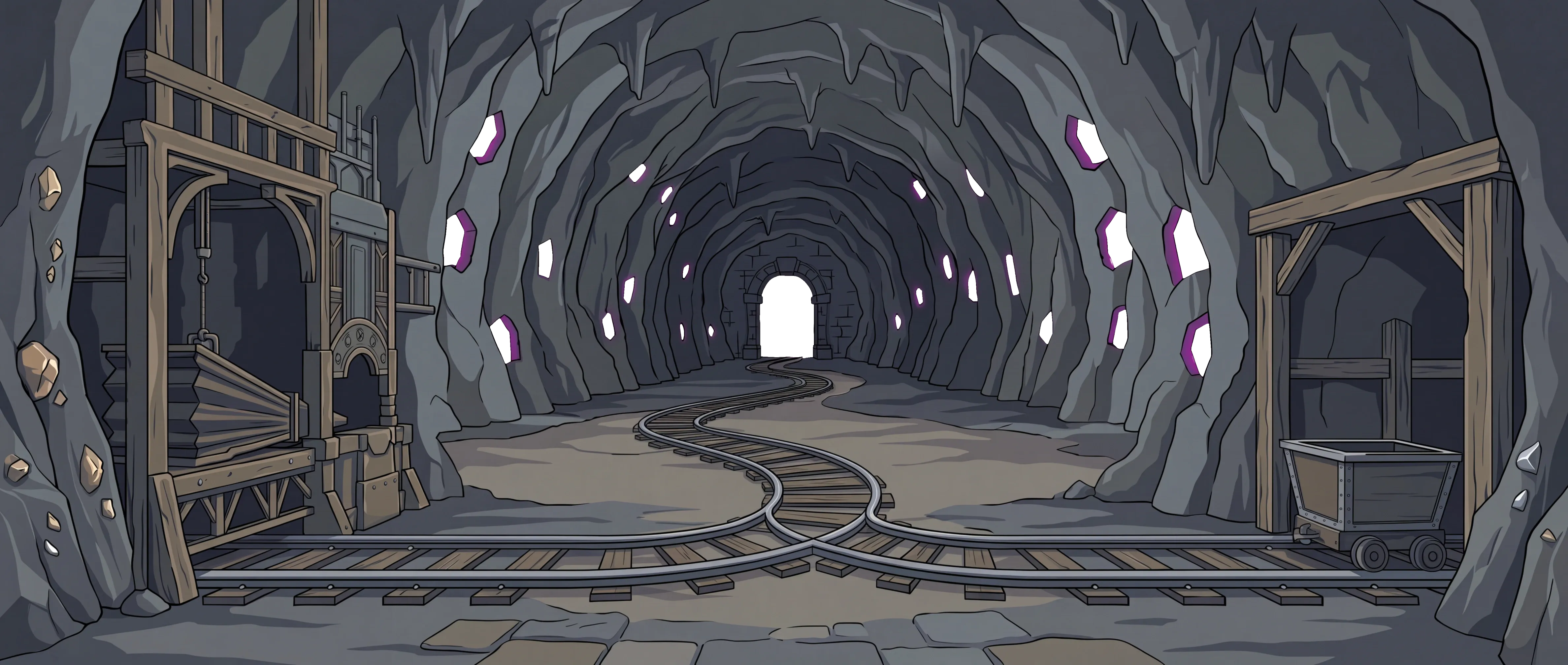
Under the world: mine shafts, cavern halls, and galleries no sky has reached.
5 landscapes, one free. The picture shown is Mine Shaft.
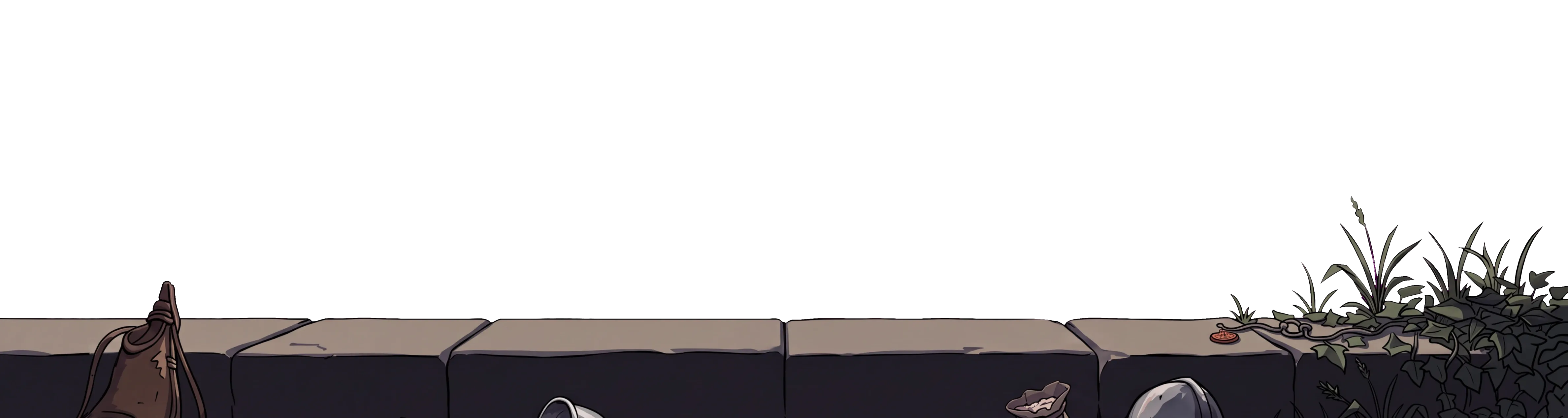
Capital
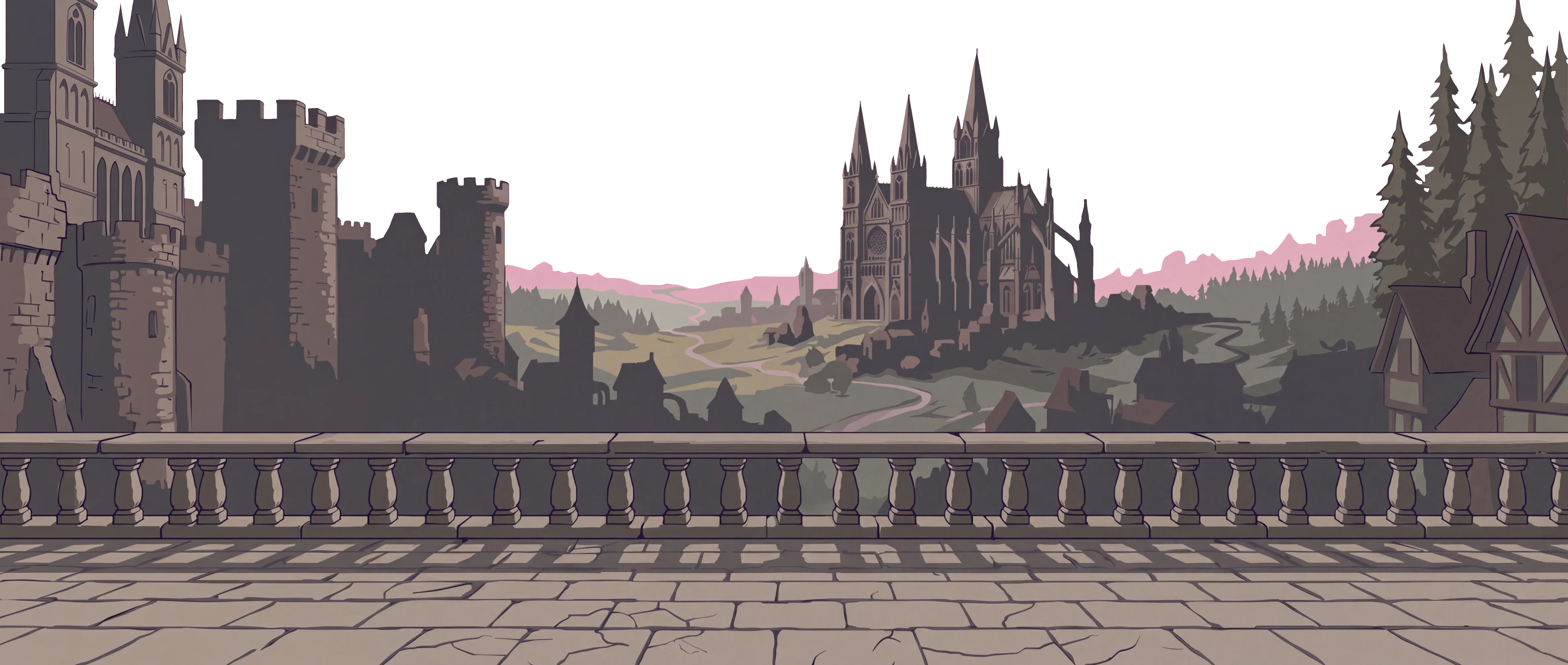
The seat of the realm: crown, cathedral, library and plaza, and the crowds between them.
5 landscapes, one free. The picture shown is Castle Balcony.
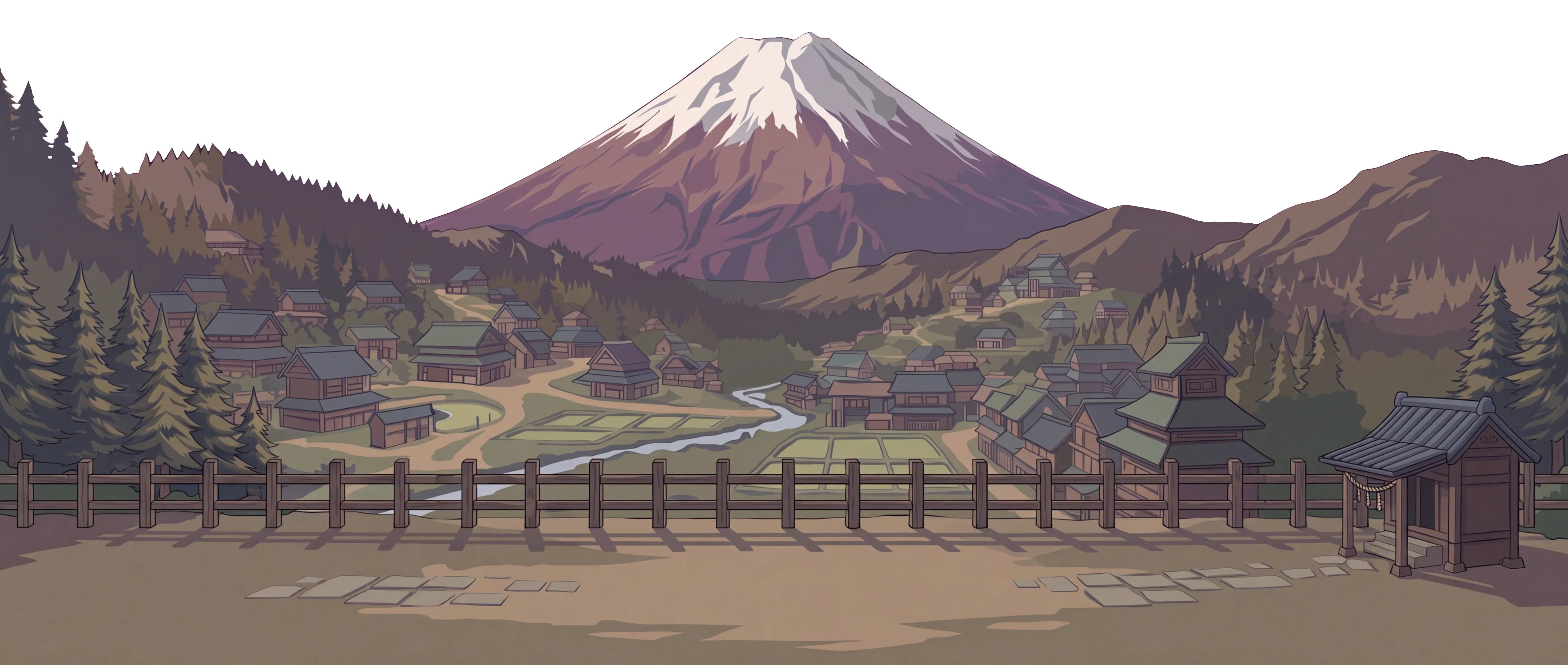

Vale
Sheltered valleys under high country — terraces, hot springs, and a shrine cut into the valley head.
5 landscapes, one free. The picture shown is Mountain Village.
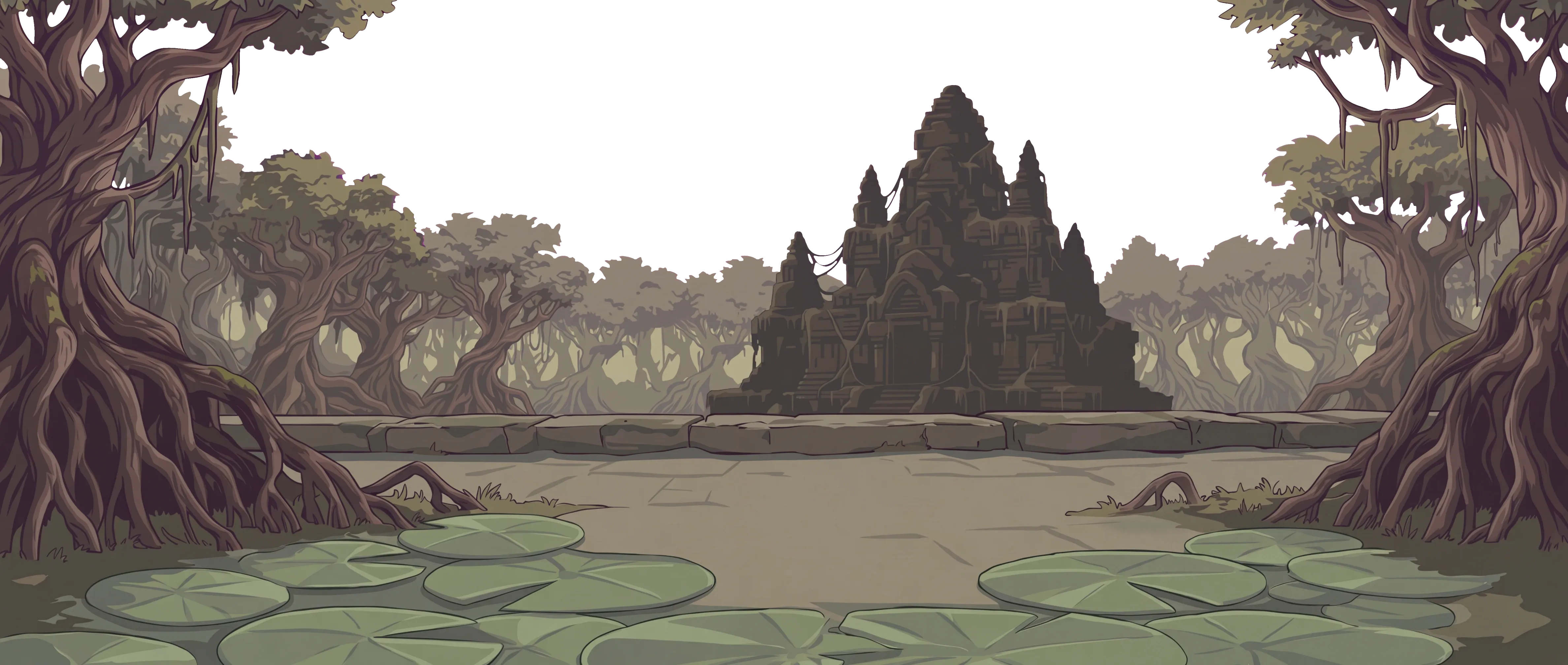
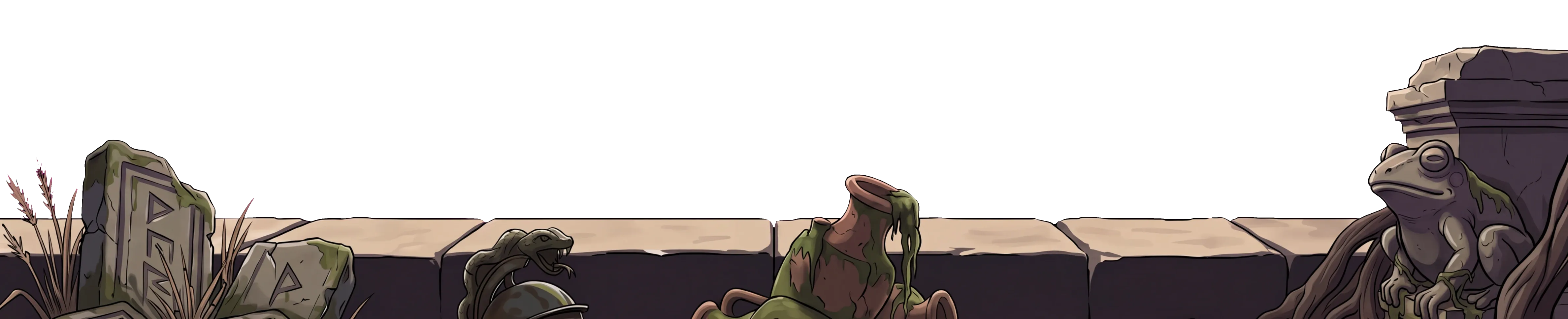
Mire
Standing water and root-tangle, where a temple sinks into the floodplain and the ground is only mostly ground.
5 landscapes, one free. The picture shown is Sacred Swamp.
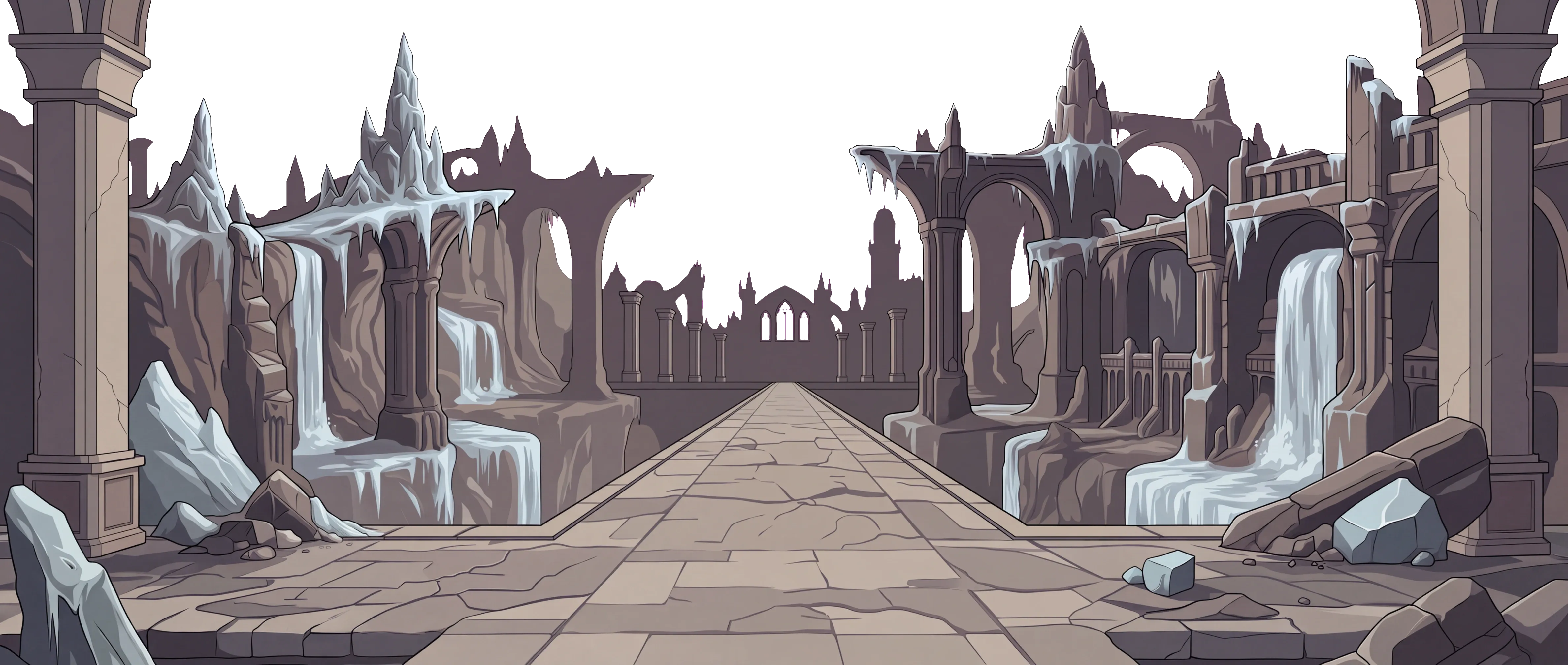
Drifts
Snowfield, glacier and frozen causeway, where the cold keeps whatever it takes.
5 landscapes, one free. The picture shown is Frozen Causeway.
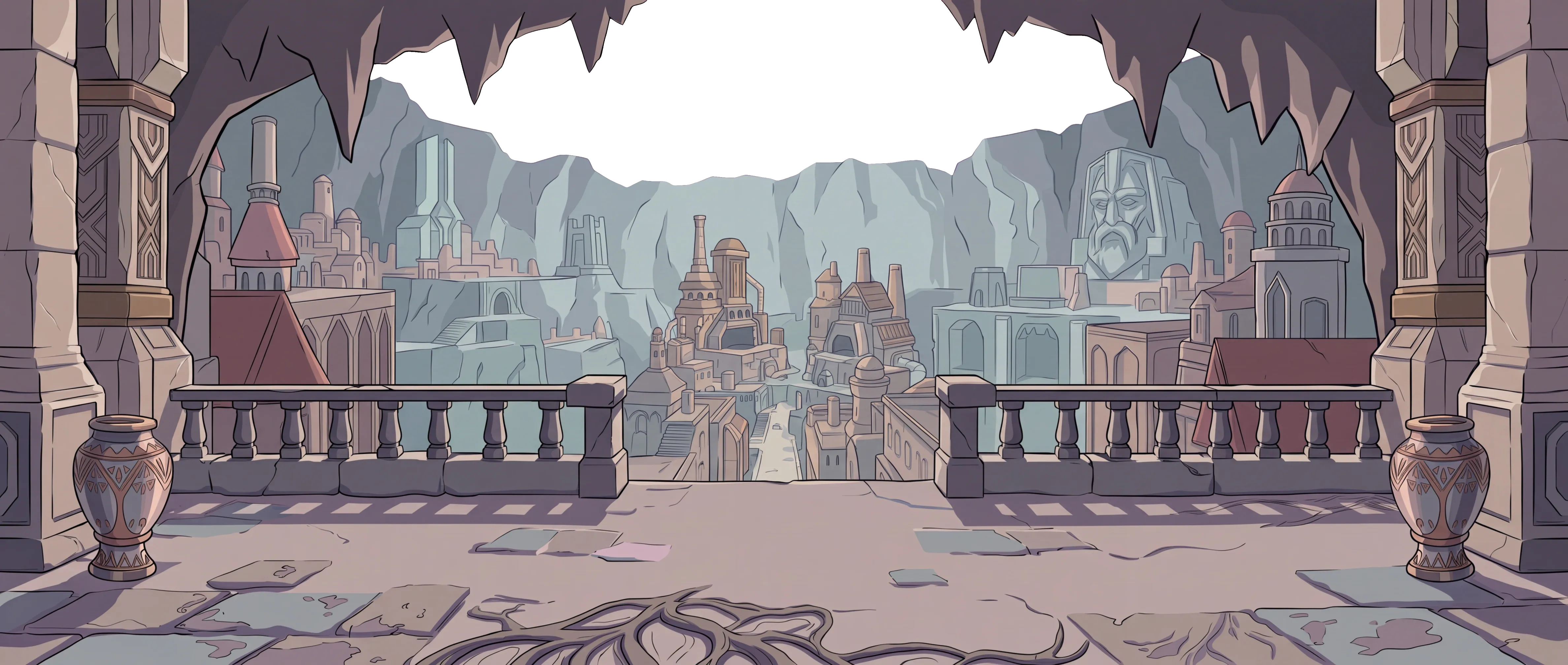
Cinder
Ash plain and geothermal country under a live mountain — the ground here has not finished cooling.
5 landscapes, one free. The picture shown is Lithic Forge.
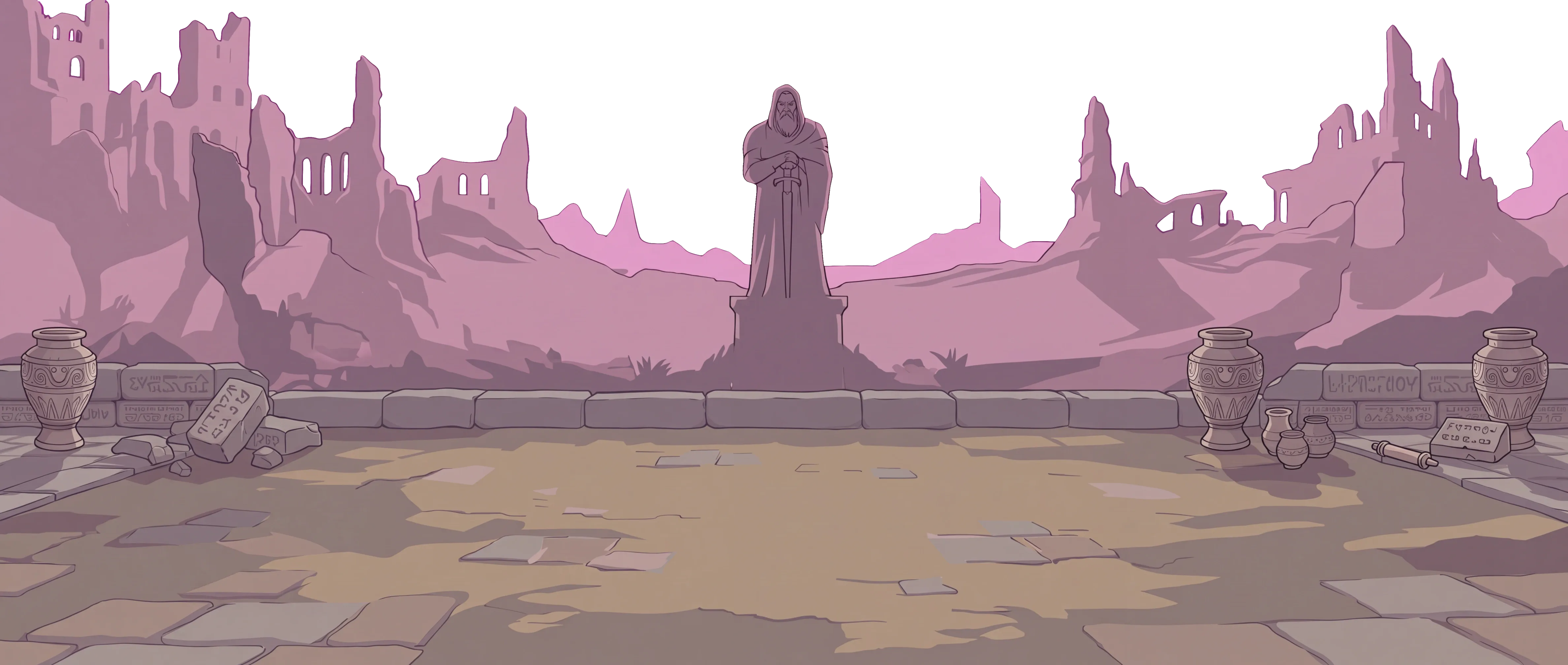
Ruins
The colonnades and toppled steles of an empire nobody living remembers, in a script nobody now reads.
5 landscapes, one free. The picture shown is Ruined Plaza.
Rift
The tear itself: a place that is not a place, where the campaign ends.
2 landscapes, one free. The picture shown is Rift Temple.
The app has 13 lands and 62 painted landscapes. One landscape per land is free, and Patron and up get all 62. Students see the teacher’s pick whatever plan they are on.
A Node (lesson) can have its own Scene, a named place inside the chapter’s land that the lesson’s text can refer to.
The Wizard is told to keep real names and facts real, and to simplify any story element that would obscure the learning objective.
Why
Brown, Collins and Duguid argue that knowledge is situated, being in part a product of the activity, context and culture in which it is developed and used, and that teaching which treats concepts as separable from where they are used limits its own effectiveness (Brown et al., 1989).
Where it can go wrong
In four experiments, students who read passages with seductive details, interesting but irrelevant additions, recalled fewer main ideas and generated fewer transfer solutions than students who read without them (Harp & Mayer, 1998).
References
- Brown, J. S., Collins, A., & Duguid, P. (1989). Situated cognition and the culture of learning. Educational Researcher, 18(1), 32–42. https://doi.org/10.3102/0013189X018001032
- Harp, S. F., & Mayer, R. E. (1998). How seductive details do their damage: A theory of cognitive interest in science learning. Journal of Educational Psychology, 90(3), 414–434. https://doi.org/10.1037/0022-0663.90.3.414
Mission
Surrealdente, LLC is a one-person software company in Kansas. It builds and operates RPGLMS, a learning platform where teachers build a course as a campaign and students play through its lessons.
Many gamified platforms add points and badges to the work a class already had. RPGLMS builds the game from the lesson itself: a student clears a lesson by reading the material, solving a clue from it, saying what they think, and passing a short quiz. The design decisions behind that, and the research for each, are on the Pedagogy stop.
Writing a unit of story-driven curriculum by hand is slow. The AI Wizard drafts campaigns, paths, lessons and quizzes from a teacher’s description and any sources they attach, and the teacher can revise every piece.
RPGLMS runs on the web, iOS, and Android. Surrealdente, LLC earns its revenue from self-serve plans: a free tier, monthly plans and credit packs at published prices, and custom Enterprise plans for schools and districts. It does no client or contract work, and RPGLMS is the only thing it makes.
🎲Try the interactive demo
Or read the documentation.
Team
One person designs, builds, and runs RPGLMS: its founder, Dr. Dillon Augustus Simmons.
Dr. Simmons wrote the app, the backend and the AI pipeline on Google Cloud, the design system and its art direction, the documentation, and this site. How it’s built has the details.
Company details
- Company
- Surrealdente, LLC
- Legal form
- Kansas single-member limited liability company
- Owner
- Dr. Dillon Augustus Simmons, founder and sole owner
- Founded
- 2021
- Product
- RPGLMS, at app.rpglms.com
- Company site
- surrealdente.com
- Business inquiries
- businesswizard@rpglms.com
- Support
- support@rpglms.com
Verify the company
Founder

Dr. Dillon Augustus Simmons
Founder
Ed.D. in Curriculum and Instruction, emphasis in Online Learning, Kansas State University
Dr. Simmons’s research covers K-12 online learning (Simmons, 2022), STEM learning experiences (Ebrahimi et al., 2023; Simmons et al., 2023), and AI in K-12 schools, including a systematic review of teachers and generative AI (Ayubian et al., 2026) and the WISE AI Literacy framework (Vontz et al., 2026).
Dr. Simmons is also a co-author of studies of the Strengthening Families Program. Merrill et al. (2026) report a randomized controlled trial of an online gamified version of the program, and Merrill et al. (2025) compare a pretest with a retrospective pretest. With Thomas Vontz, Dr. Simmons co-wrote EDCI 702: Curriculum, Instruction, and Assessment, an open graduate textbook on curriculum, instruction, and assessment (Vontz & Simmons, 2020), free to read under CC BY-NC-SA 4.0.
Also: Grant and Research Coordinator, Rural Education Center, Kansas State University
At the Rural Education Center, Dr. Simmons has secured $4.47 million in state equipment awards through Kansas’s Advancing Digital Opportunities to Promote Technology (ADOPT) program, run by the Kansas Office of Broadband Development: 3 awards totaling $1,484,215 in 2024 and 3 awards totaling $2,985,077 in 2025. The awards put tablets and Chromebooks in the hands of elementary, middle, and high school students across rural Kansas districts.
Surrealdente is an independent company. The degree, the textbook, and the grant work above belong to Dr. Simmons’s academic career, and Kansas State University holds no ownership of, investment in, or endorsement of RPGLMS.
Verify the founder
Jimmy Simmons, an interaction designer and creative director in New York, advises on AI integration, art direction, and gamification as a contractor.
References
- Ayubian, S., Aguilar Chávez, G., Wiafe, E., Shahsavari, V., Khamisani, N., Sohail Quidwai, N. u. S., Simmons, D., Rios, A., Sadique, F., & Clark, J. S. (2026). Teachers and generative AI: A systematic review of adoption, competence, professional development, and socio-technical experiences. Education Sciences, 16(9), Article 1501. https://doi.org/10.3390/educsci16091501
- Ebrahimi, M., Simmons, D., & Clark, J. S. (2023). Exploring virtual and augmented reality STEM learning experiences with American K-12 students: A scoping review. Journal of Interactive Learning Research, 34(4), 575–604. https://doi.org/10.70725/486192xjmsuq
- Merrill, R. M., Simmons, D., & Brown, J. L. (2025). Comparison of a pretest versus a retrospective pretest with parents and children involved in the Strengthening Families Program. Health Behavior Research, 8(3). https://doi.org/10.4148/2572-1836.1308
- Merrill, R. M., Simmons, D., Brown, J. L., & Kumpfer, K. L. (2026). Randomized controlled trial of an online gamified version of the Strengthening Families Program to reduce youth substance abuse. International Journal of Adolescence and Youth, 31(1), Article 2683715. https://doi.org/10.1080/02673843.2026.2683715
- Simmons, D. (2022). Lessons from COVID-19: Four reasons school communities should embrace K-12 online learning. Journal of Online Learning Research, 8(2), 235–258. https://doi.org/10.70725/087338byxtfp
- Simmons, D., Clark, J. S., Goodson, L., Darvishinia, N., & Ebrahimi, M. (2023). Exploring teachers’ perceived needs for quality STEM learning experiences. Journal of Technology and Teacher Education, 31(4), 459–492. https://doi.org/10.70725/454694qgikvi
- Vontz, T., & Simmons, D. (2020). EDCI 702: Curriculum, instruction, and assessment. New Prairie Press.
- Vontz, T., Larson, L., Windsor, M., Bradshaw, D., & Simmons, D. (2026). WISE AI literacy: A durable framework of human agency for K-12 schools. Educational Considerations, 51(3). https://doi.org/10.4148/edconsiderations.20921
How it’s built
This tab is the technical record: what runs in production, and why it is built that way.
Dr. Simmons wrote all of it and checked it against the source on 2026-10-07.
The stack
The client is one Flutter codebase for the web, iOS and Android, with Rive for the animated characters and creatures. The server is Serverpod 4 (Dart) in a slim Debian container on Cloud Run, with PostgreSQL 17 on Cloud SQL as the database and Gemini on Vertex AI behind the AI Wizard.
Google Cloud in production
There are two projects, staging and production, both in us-central1. The same Terraform defines both, so staging is a real rehearsal for production.
- Cloud Run
- Two services: the Serverpod API, and a separate internal-only AI worker that runs long course generations (30-minute timeout) so they never tie up the API.
- Cloud Run Jobs
- Database migrations, run as a job on every deploy.
- Cloud Tasks
- The queue that hands AI generations from the API to the worker, authenticated with OIDC tokens rather than a shared secret.
- Cloud Functions (2nd gen)
- The webhook receiver for subscription events (via RevenueCat).
- Cloud SQL for PostgreSQL 17
- The database, reached over private service access, with daily backups; production keeps 30.
- Cloud Storage
- Private user uploads served through signed URLs, plus the static buckets for the web app and the websites.
- Cloud Load Balancing + Cloud CDN
- One global HTTPS load balancer with a managed certificate; the web app and sites are served through the CDN.
- VPC + Cloud NAT
- Cloud Run reaches the database over Direct VPC egress; outbound traffic leaves through Cloud NAT.
- Secret Manager
- Runtime secrets, with access granted per service account.
- Artifact Registry
- The container images Cloud Run deploys.
- Cloud Logging, Monitoring, Trace, Error Reporting
- Log-based metrics, thirteen alert policies and a dashboard, all defined in Terraform.
- Vertex AI
- Gemini, for course generation and illustration (below).
Deploys and access
GitHub Actions deploys to Google Cloud through Workload Identity Federation, with no service-account keys. The federation is bound to the app’s repository and to specific workflows and branches, and key creation is switched off by organization policy on both projects, so a key can’t be made by mistake.
Networking, services, the database, queues, buckets, IAM and alerting are all Terraform. Secret values are the one thing set by hand, so they never pass through a repository.
The AI authoring pipeline
The AI Wizard turns a teacher’s description of a course, and any sources they attach, into a structured course: campaigns, paths, lessons, quizzes and illustrations. The teacher can revise every piece afterward.
Text comes from gemini-3.8-flash and illustrations from gemini-3.1-flash-image and gemini-3-pro-image, all on Vertex AI (as of 2026-10-07). A course is generated in segments that run in parallel rather than as one long request, and each segment gets its own thinking depth, so simple parts cost less and come back sooner. Long generations go through Cloud Tasks to the AI worker, so the API stays responsive while a course is being written.
Model output goes through a parse with five numbered steps: extract, decode (including recovering a response cut off at the token limit), clean, transform, and parse into typed database models, with a coherence check between clean and transform.
A token-bucket rate limiter and a circuit breaker sit in front of Vertex AI. Every call has a hard timeout and an output-token cap, tighter on the heaviest segments, and a loop detector tells a response stuck repeating itself from one that was simply cut off. Every call is metered against the account’s AI credit balance. The content of AI request logs is deleted after 90 days.
Students and their data
Before a quiz reaches a student, the correct answers are removed and replaced with SHA-256 hashes, so the key can’t be read from the browser’s network tab. The server then grades every answer again itself, and only its result counts.
In the app, sign-up opens with a neutral date-of-birth question, and an answer under 13 ends sign-up without creating an account.
Deleting an account from inside the app removes the sign-in and ends every session, anonymizes the player record and deletes the avatar, all in one database transaction. The steps are in how to delete an account.
Gamemaster Gus is the mascot. Dr. Simmons answers email sent to businesswizard@rpglms.com.
Teachers and students use every teaching feature for free. That covers building courses and Parties, joining a Party, and playing every lesson and quiz. Paid plans add AI credit, the full set of avatar cosmetics and collaboration between teachers.
Free
- AI credit
- None (no AI generation)
- Includes
- Unlimited campaigns, parties, and students; basic avatar cosmetics. Joining a Party is always free.
Patron
$2.99/mo
- AI credit
- 100 credits / month
- Includes
- Full avatar cosmetics, all mob types & colors, and AI content generation.
Lord
$9.99/mo
Starts with a 7-day free trial.
- AI credit
- 350 credits / month
- Includes
- More AI credit, collaborators on your courses, public parties, and email support.
Enterprise
Custom
- AI credit
- Pooled across the organization
- Includes
- Realms for schools and districts, set up by the founder.
Schools & districts has the details.
AI credit
AI generation is included from Patron up. Free accounts get no monthly credit. The single exception is credit an administrator has granted to the account, which a Free account may spend.
Every paid plan bills monthly, and its credit arrives on the renewal date. Unused credit is banked, up to 2 months’ worth of the plan’s allowance. Credit packs (Quick Refill, Campaign Pack, Builder's Vault) can be bought on top of a paid plan. Enterprise accounts have no individual allowance. A Realm draws on one weekly credit pool that its administrator sets for the whole organization.
Buying packs, changing plans and restoring a purchase are covered in the subscription guide.
Enterprise for a school or district
Enterprise gives a school or district its own Realm, where its educators keep their courses (Houses) together and share one pool of AI credit, priced to the organization.
Each Realm is set up by hand, so the first step is an email to businesswizard@rpglms.com. The Realm guide shows what a Realm’s administrator does once it exists. Questions about student privacy and safety are answered under Help.
Email about EnterpriseRPGLMS is built and run by Dr. Dillon Augustus Simmons, who answers this address personally.
Email support@rpglms.com. RPGLMS is run by one person, its founder, who reads every message. Replies usually come within 1–2 business days.
Email supportTroubleshooting
The app won’t load or crashes
- Close the app completely and reopen it.
- Check your internet connection.
- Update to the latest version from the App Store or Play Store.
- Restart your device.
- If the problem persists, uninstall and reinstall the app. Your data is saved to your account.
I can’t sign in
- Use the sign-in method you signed up with: email and password, Google, or Apple.
- Check that you are using the same email address you registered with.
- Try signing in on the web app at app.rpglms.com.
- Clear the app cache and try again.
- Email support@rpglms.com if you still can’t reach your account.
My subscription isn’t showing as active
- Allow a few minutes for payment processing to finish.
- Pull down to refresh your account status in the app.
- Sign out and sign back in.
- Check your subscription status in your App Store or Play Store settings.
- For a web subscription, look for the payment confirmation in your email.
- Email support@rpglms.com with your purchase receipt if it still isn’t active.
I can’t join a Party
- Check the join code with the Gamemaster. Upper or lower case doesn’t matter.
- Make sure you are signed in to your account.
- If the Gamemaster changed the Party’s code, use the new one.
- Email support@rpglms.com with the code and the message you see.
The AI features aren’t working
- Check your AI credit balance on the Subscription screen.
- AI generation is included from Patron up. A Free account can spend only credit that an administrator has granted it.
- Lord credit is an individual allowance (350 credits/month), not shared.
- Try a simpler, shorter prompt.
- Wait a moment and try again, since demand can be high.
- Plan credit arrives on the renewal date, and unused credit is banked up to 2 months’ worth, with no weekly reset. Enterprise Realms draw on a pooled allowance whose window the Realm’s administrator sets. A Patron or Lord account that runs out early can buy a credit pack at any time.
My progress isn’t syncing
- Check your internet connection.
- Pull down to refresh the screen.
- Sign out and sign back in to force a sync.
- Make sure you are using the same account on every device.
- Wait a few minutes, since a large campaign can take time to sync.
About RPGLMS
What is RPGLMS?
RPGLMS (Role-Playing Game Learning Management System) runs a course as a campaign. A teacher (the Gamemaster) builds a House (course) from Campaigns (units), each made of Paths (chapters) and Nodes (lessons). A lesson is a short run of steps (Checks): students read or watch, solve a clue and say what they think, then take a quiz (the Engagement). Each chapter ends in a Trial (chapter quiz) and each unit in a Rift (final exam), quiz battles that reuse the lessons’ questions. Students earn Shards (XP) and Renown (likes from classmates). Paid plans add an AI Wizard that drafts units, lessons and questions for the teacher to review. The research behind the design is on Pedagogy, and the people who build it are on About.
Who is RPGLMS for?
Teachers, tutors and homeschool parents build courses in it, and students aged 13 and over play them. Schools and districts can run it for a whole organization on the Enterprise plan.
Is RPGLMS safe for students?
Sign-up starts with a date-of-birth question, and an answer under 13 ends sign-up without creating an account. RPGLMS shows no ads and doesn’t sell data. A class is joined with the teacher’s private six-character code. New lessons the AI Wizard writes are saved as drafts, which students cannot see until the teacher publishes them. Quiz answer keys never reach the student’s device, because the server grades every answer.
Plans and billing
What plans are available?
Free, Patron ($2.99 a month), Lord ($9.99 a month) and Enterprise (custom, for schools and districts). The Plans tab on this page lists what each one includes. Every paid plan bills monthly and renews until it is cancelled. Annual plans are not offered.
How do I subscribe?
Subscribe inside the RPGLMS app on iOS or Android, or in the web app at app.rpglms.com. Payment goes through the App Store, Google Play, or the web payment provider, and the subscription starts as soon as the purchase completes.
How do I cancel my subscription?
Cancel through the store that billed you. On iOS, open Settings, tap your name, then Subscriptions. On Android, open the Play Store menu, then Subscriptions. On the web, open Account Settings, then Subscription. A cancelled plan keeps its paid features until the end of the billing period, and the account then returns to Free.
Can I get a refund?
Access starts the moment a plan is bought, so refunds are generally not offered. Refunds that the law of your jurisdiction requires will be honored. Apple and Google handle refunds for their own purchases: reportaproblem.apple.com for the App Store and Google Play Help for Google Play. For a web purchase, or a technical problem that stops you using the service, email support@rpglms.com.
How it works
How does AI content generation work?
The teacher describes the unit in their own words, and the AI Wizard drafts its chapters, its lessons and their steps, quiz questions and vocabulary, written from any documents the teacher has added to the course’s Source Library. New lessons stay drafts until the teacher publishes them. AI generation is included from Patron up (100 credits/month on Patron, 350 credits/month on Lord), and Enterprise organizations share a pooled allowance. Free accounts get no monthly credit. The single exception is credit an administrator has granted to the account, which a Free account may spend. Plan credit arrives on the renewal date, and what is not spent stays in the balance, up to 2 months’ worth of the monthly credit. A teacher who runs out early can buy a credit pack.
How do Parties (classrooms) work?
A Gamemaster creates a Party (cohort) on a course and gets a six-character join code. Students enter the code to join, which enrolls them in every unit of the course. Each Party has its own leaderboards for Trials and Rifts, and the Gamemaster tracks individual and group progress in the Party gradebook.
Can I use RPGLMS on more than one device?
Yes. RPGLMS runs on iOS, Android and the web. Sign in with the same account on any device and your progress, content and subscription status sync. A teacher can build content on a computer and check student progress from a phone.
Your account and data
How do I delete my account?
Open the app menu, tap Delete Account at the bottom, and type “delete my account” to confirm. Sign-in is disabled at once and your name becomes “Deleted User”. Any Party you run as Gamemaster is deactivated, so its students lose access. Your courses and class records stay on the anonymized account. Deleting does not cancel a subscription, so cancel it in the App Store, Google Play or Stripe first. If you can’t reach the app, email support@rpglms.com with the subject “Account Deletion Request”, and it is processed within 7 business days. Details are on the account deletion page.
Can I get a copy of my data?
Yes. Email support@rpglms.com with the subject “Data Export Request”, and the data is sent in a portable format within 30 days.
How is my data protected?
Data is encrypted in transit (HTTPS) and at rest on Google Cloud. You sign in with email and password, Google, or Apple. RPGLMS doesn’t sell data, doesn’t show ads, and collects only what the service needs. How it is built is on About, and the details are in the Privacy Policy.
I forgot my password. How do I reset it?
On the sign-in screen, choose to reset your password and follow the code sent to your email. If you signed up with Google or Apple, sign in with that instead, because there is no RPGLMS password to reset. Still stuck? Email support@rpglms.com.
Getting help
How do I report a bug or suggest a feature?
Email support@rpglms.com with the subject “Bug Report” or “Feature Suggestion”. For a bug, include the device and app version, the steps that lead to it, what you expected and what happened instead, and a screenshot or screen recording if you can.
I’m interested in Enterprise. Who do I contact?
Email businesswizard@rpglms.com. Enterprise gives a school or district its own Realm, where its educators hold their courses (Houses) together and share a pool of AI credit, priced to the organization. The founder sets up each Realm.